By AIProSpace Team · Updated Apr 13, 2026
Best AI & Coding Books in 2026
For developers and technical readers who want to understand the foundations and applications of AI in software development.
Best AI Books — Quick Reference Table
| # | Title | Author | Rating |
|---|---|---|---|
| 1 | The Worlds I See | Fei-Fei Li | 4.6 ★ |
| 2 | The Alignment Problem | Brian Christian | 4.5 ★ |
| 3 | AI: A Guide for Thinking Humans | Melanie Mitchell | 4.5 ★ |
| 4 | Human Compatible | Stuart Russell | 4.4 ★ |
| 5 | Life 3.0 | Max Tegmark | 4.3 ★ |
| 6 | Superintelligence | Nick Bostrom | 4.1 ★ |
| 7 | The Coming Wave | Mustafa Suleyman | 4.1 ★ |
| 8 | Atlas of AI | Kate Crawford | 4.2 ★ |
| 9 | Prediction Machines | Ajay Agrawal, Joshua Gans, Avi Goldfarb | 4.1 ★ |
| 10 | AI Superpowers | Kai-Fu Lee | 4.3 ★ |

#1
The Worlds I See
by Fei-Fei Li · November 7, 2023
A memoir by the Stanford professor who co-created ImageNet and pioneered modern computer vision. Fei-Fei Li weaves her personal journey as a Chinese immigrant with the history of artificial intelligence, offering a rare inside view of how modern AI was built.
My Take
This is the most human AI book I have read. Fei-Fei Li does not write about AI as an abstract technology — she writes about it as a life's work. Her story of immigrating from China, working as a teenager to support her family while secretly applying to Princeton, and then building ImageNet while facing institutional skepticism is genuinely moving. The technical history is accurate and accessible, but it is the personal story that makes this essential reading. Best for anyone who wants to understand where modern AI came from and who actually built it.
#2
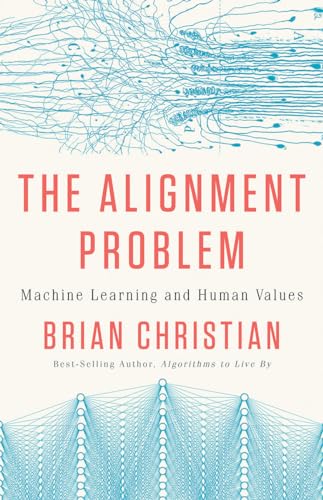
The Alignment Problem
by Brian Christian · October 6, 2020
An investigation into one of the most important problems in computer science: how do we build AI systems that do what we actually want? Brian Christian interviews leading researchers and explains the gap between what we build and what we intend.
My Take
Brian Christian has a gift for making hard problems feel urgent without being alarmist. The Alignment Problem covers reinforcement learning, reward hacking, interpretability, and value alignment through vivid stories and careful reporting. I came away with a much clearer sense of why alignment is hard and why researchers at OpenAI, DeepMind, and Anthropic consider it the defining challenge of our time. Best for anyone who wants to understand what AI safety actually means in technical terms.

#3
AI: A Guide for Thinking Humans
by Melanie Mitchell · October 15, 2019
A clear-eyed assessment of AI capabilities and limitations from a leading complexity scientist. Mitchell cuts through both hype and fear with careful analysis of what AI systems can and cannot do.
My Take
Melanie Mitchell writes with the calm authority of someone who has studied intelligence her entire career. This book is the best antidote to both AI hype and AI panic. She takes each claimed breakthrough seriously, examines the evidence, and explains what it actually means. Her treatment of deep learning is honest: impressive but brittle, powerful but poorly understood. Best for readers who want a grounded, intellectually honest take on the state of AI.
#4
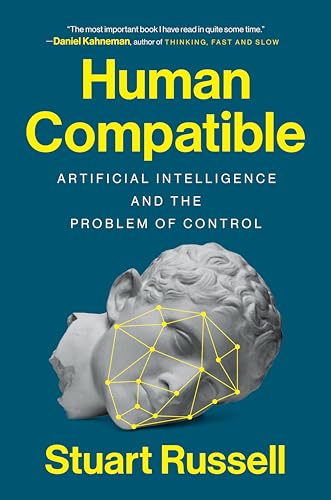
Human Compatible
by Stuart Russell · October 8, 2019
The co-author of the definitive AI textbook argues that the standard model of AI development is fundamentally broken and proposes a new approach based on machines that are uncertain about human preferences.
My Take
Stuart Russell has been thinking about AI alignment longer than almost anyone. Human Compatible is his clearest public statement of why he believes current AI development is on the wrong track and what to do about it. His core argument — that we need to build machines that are uncertain about what humans want, rather than optimizing for fixed objectives — is simple but profound. The writing is dense but rewarding. Best for technical readers who want a serious treatment of long-term AI safety.
#5
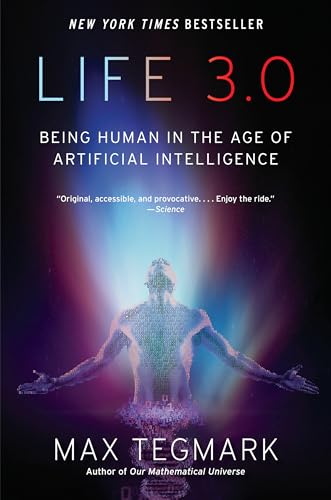
Life 3.0
by Max Tegmark · August 29, 2017
A physicist's guide to the future of artificial intelligence, exploring scenarios for how superintelligent AI could transform society, work, and the nature of existence itself.
My Take
Max Tegmark writes with the enthusiasm of a physicist who has discovered the most interesting problem in the universe. Life 3.0 is ambitious — it covers everything from near-term automation to the far future of digital consciousness. Some scenarios feel speculative but are clearly labeled as such. The book's greatest strength is helping readers develop a framework for thinking about AI futures that goes beyond simple utopian or dystopian narratives. Best for readers who want to think seriously about long-term consequences.
#6
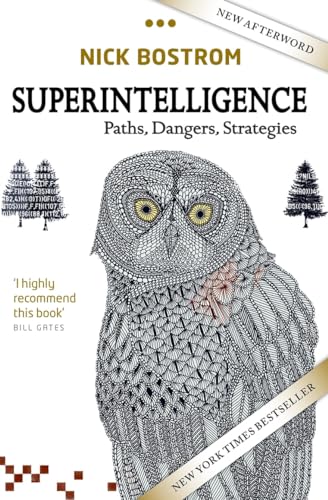
Superintelligence
by Nick Bostrom · July 3, 2014
The book that launched a thousand AI safety careers. Bostrom examines the prospect of machine superintelligence and argues that managing this transition will be the most important challenge humanity has ever faced.
My Take
Superintelligence is dense and technical, but it belongs on this list because it is arguably the most influential AI book ever written. It convinced Elon Musk, Bill Gates, and Stephen Hawking to take AI risk seriously. Today, many of Bostrom's specific arguments have been refined or challenged, but the core concern — that very capable AI systems pursuing misspecified goals could be catastrophic — remains a live research question. Read it for historical context and intellectual groundwork, not as the final word.
#7
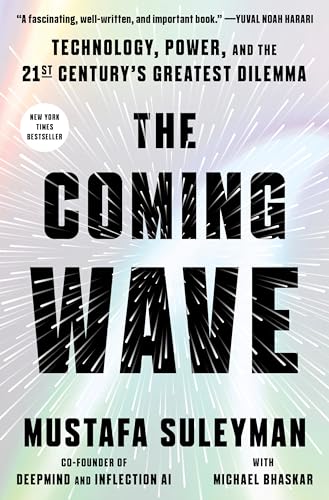
The Coming Wave
by Mustafa Suleyman · September 5, 2023
The co-founder of DeepMind and creator of Inflection AI argues that AI and synthetic biology represent a wave of powerful technology that governments are unprepared to manage.
My Take
Mustafa Suleyman has built some of the most powerful AI systems in existence, which makes The Coming Wave worth reading on those credentials alone. His core argument — that the containment of powerful technology is nearly impossible but absolutely necessary — is genuinely original. Unlike most AI books, this one takes seriously the political economy of AI development and why it is so hard to slow down. Best for policy-minded readers and anyone who wants to understand why AI governance is so difficult.
#8
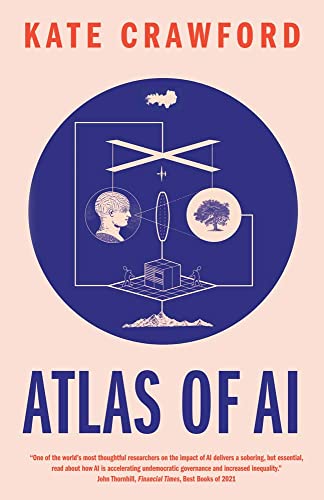
Atlas of AI
by Kate Crawford · April 6, 2021
A critical examination of the physical, social, and political costs of artificial intelligence, from mining the minerals for hardware to the labor behind content moderation.
My Take
Kate Crawford provides an essential corrective to the usual AI narrative. Rather than focusing on algorithms, she traces AI to its material roots: the lithium mines, the Amazon warehouses, the underpaid data labelers. This is not an anti-AI book per se — it is a demand for honest accounting. The writing is excellent and the research is meticulous. Best for readers who want to understand the full cost structure of AI systems beyond the server room.
#9
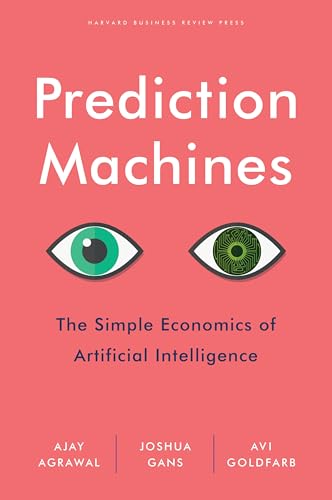
Prediction Machines
by Ajay Agrawal, Joshua Gans, Avi Goldfarb · April 17, 2018
Three economists reframe AI as a technology that dramatically reduces the cost of prediction, and explain what this means for strategy, management, and the economy.
My Take
Prediction Machines is the most useful business AI book I have read. The central insight — that AI is fundamentally a prediction technology, and cheap prediction changes everything — is simple and powerful. The authors are economists, so they think carefully about incentives and tradeoffs rather than just listing applications. The strategy implications for businesses are concrete and actionable. Best for executives, managers, and entrepreneurs who want to think clearly about AI's business implications.
#10
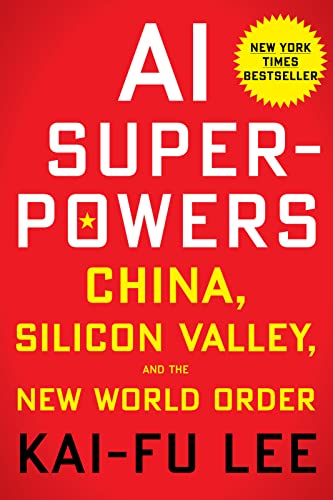
AI Superpowers
by Kai-Fu Lee · September 25, 2018
The former head of Google China argues that the AI race between the US and China will reshape the global economy, and explains why China may have structural advantages in AI deployment.
My Take
Kai-Fu Lee brings a unique perspective — he has led AI labs in both Silicon Valley and Beijing. His argument that China's massive data advantage and willingness to deploy AI aggressively could outweigh the US's research edge was controversial in 2018 and remains debated today. Regardless of whether his predictions prove correct, the framework is useful: implementation advantage vs. research advantage is a real distinction. Best for anyone thinking about AI geopolitics and competitive strategy.
Frequently Asked Questions
What is the best AI book for beginners?
The Worlds I See by Fei-Fei Li is the best starting point — it tells the story of modern AI through a deeply personal memoir that requires no technical background. AI: A Guide for Thinking Humans by Melanie Mitchell is the best purely explanatory book for non-technical readers.
Which AI books are actually worth reading?
From this list, the essential reads are: The Worlds I See (for history and humanity), The Alignment Problem (for safety), Prediction Machines (for business strategy), Life 3.0 (for big-picture thinking), and Machines of Loving Grace (for what's happening right now).
What AI books do AI researchers recommend?
Researchers consistently recommend: Human Compatible (Stuart Russell) for foundational thinking on alignment, The Alignment Problem (Brian Christian) for an accessible deep dive, and Superintelligence (Nick Bostrom) for historical context on how safety concerns developed.
Are there good free AI books?
Several excellent AI books are freely available online. 'Artificial Intelligence: A Modern Approach' has partial content available. Many academic AI papers and textbooks are freely accessible on arXiv. The books on this list require purchase, but most are available at public libraries.